Reflections on the ACT Annual Meeting: Where Science Meets Connection

The American College of Toxicology (ACT) Annual Meeting continues to be my favorite scientific event of the year, and for good reason. More than just a conference, ACT serves as a cornerstone in the advancement of applied toxicology, bringing together a diverse and passionate community of professionals.
This year’s meeting was no exception. The sessions were rich with cutting-edge research, regulatory updates, and practical insights that are directly applicable to my work in safety assessment. But hands down, the coolest part of the scientific meeting was all the buzz around gene therapies. Everywhere you turned, people were talking about siRNAs, oligonucleotides, or engineered vectors that are getting smarter and more targeted by the day. It really felt like the field is hitting its stride, and ideas that used to sound futuristic are now actually happening.
ALTASCENCES’ PRESENTATIONS
Our team presented several posters at ACT this year—one of which was titled “Toxicological Reference Data for 6- to 9-Month Male and Female Sinclair Nanopigs®”, and presented by Principal Scientist and Study Director, Kayleigh McGinley. The poster provides a rich baseline dataset (body weight, hematology, serum chemistry, ECG, ophthalmology, and tissue pathology) for this miniature-swine model, filling a gap in publicly available reference values.
This is especially relevant to fellow attendees of the American College of Toxicology meeting, because such well-characterized, non-rodent models improve species selection and enhance confidence when interpreting safety and toxicology data, which in turn supports safer, more predictive preclinical drug development.
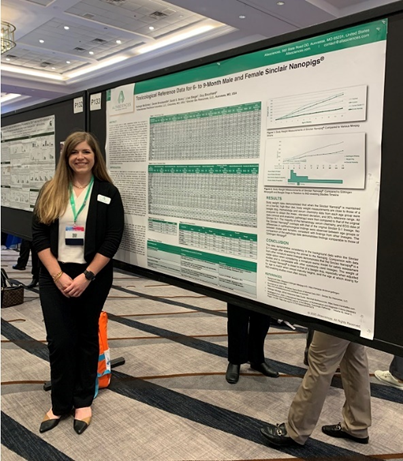
Click here to watch Kayleigh's poster presentation.
In addition, we contributed four more scientific posters to the conference:
- Assessments for the In Vivo Tolerability and Efficacy of a JAK1-Silencing RNA Being Developed for the Highly Targeted, Infrequent, and Efficacious Treatment of Inflammatory Skin Diseases Using Various Application Techniques, presented by Shanté Jackson, Scientist, Study Director
- A Validation Study of the Effects of Milrinone and Clonidine on Left Ventricular Pressure in Conscious Telemetered Canines, presented by Miri Pannu, MS, Associate Scientific Director
- Comparative Analysis of Background Gastrointestinal Characteristics in Cambodian, Vietnamese, and Mauritian Cynomolgus Monkeys: Optimizing Model Selection in Preclinical Safety Assessment of Antibody-Drug Conjugates, presented by Yafei Chen, MS, Senior Research Fellow
- Validation of a Flow Cytometric Method for Immune Cell Populations Analysis in Miniature Swine Whole Blood With 71-Hour Pre-Stain Stability, presented by Ranjithkumar Ravichandran, Scientist II (LS)
A STRONGER SENSE OF COMMUNITY
What truly sets ACT apart is the sense of community. It’s a place where science meets connection. One of the best parts of this meeting, for me, was catching up with friends and reconnecting with 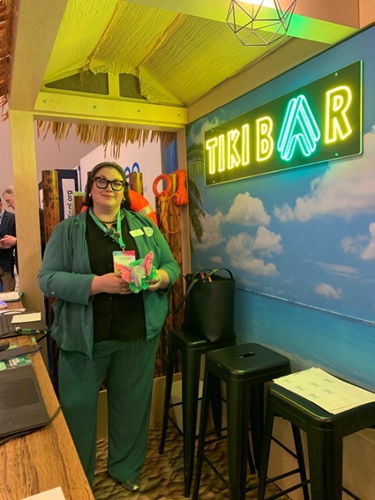 familiar faces—some I hadn’t seen since the previous meeting a year ago. These moments go way beyond small talk; they’re opportunities to exchange updates on projects, shared lessons learned and celebrate wins both big and small. ACT creates the perfect space to strengthen existing connections and spark new ones, all while diving deep into the science we all care about.
I also had the chance to engage in insightful discussions with many prospective clients at our tiki-themed booth, which turned into deeper discussions about scientific strategy, regulatory hurdles, and ways we might work together in the future. That’s the magic of ACT—it creates a relaxed, open atmosphere that makes it easy to connect and explore new partnerships.
Beyond the science and networking, ACT also plays a pivotal role in mentoring the next generation of toxicologists. It’s inspiring to see seasoned professionals share their time and wisdom. It really shows how committed this community is to shaping the future of the field.
In a rapidly evolving scientific landscape, ACT remains a beacon for applied toxicology. It’s where ideas are born, relationships are deepened, and the collective mission of protecting public health is reaffirmed. I’m already looking forward to next year’s meeting, and to the continued growth and impact of this incredible community.
ABOUT THE AUTHOR
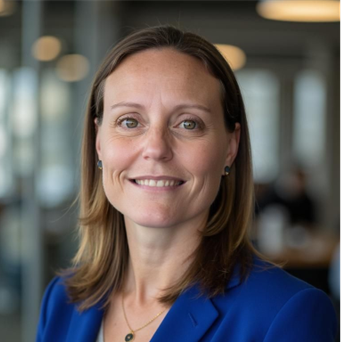
Julie Forget, Senior Director of Safety Assessment
With over 20 years of experience in the preclinical research industry, Julie Forget currently serves as Senior Director of Safety Assessment at Altasciences. She has built a career focused on advancing the science of toxicology and supporting the development of early-career professionals in the field. Earning DABT certification in 2016, Julie currently leads a team of preclinical study directors at the company’s facility in Seattle, WA, overseeing a diverse portfolio of nonclinical safety studies in support of regulatory submissions across multiple therapeutic areas.
Julie is someone who’s happiest when creating, exploring, or enjoying the outdoors. She loves skiing in the mountains and finding any excuse to get out on fresh snow. At home, she is often absorbed by a house renovation project—looking for ways to imbue a space with more functional and character. She also enjoys traveling, whether discovering new cities on a cruise ship or finding quiet corners of the world to unwind.